
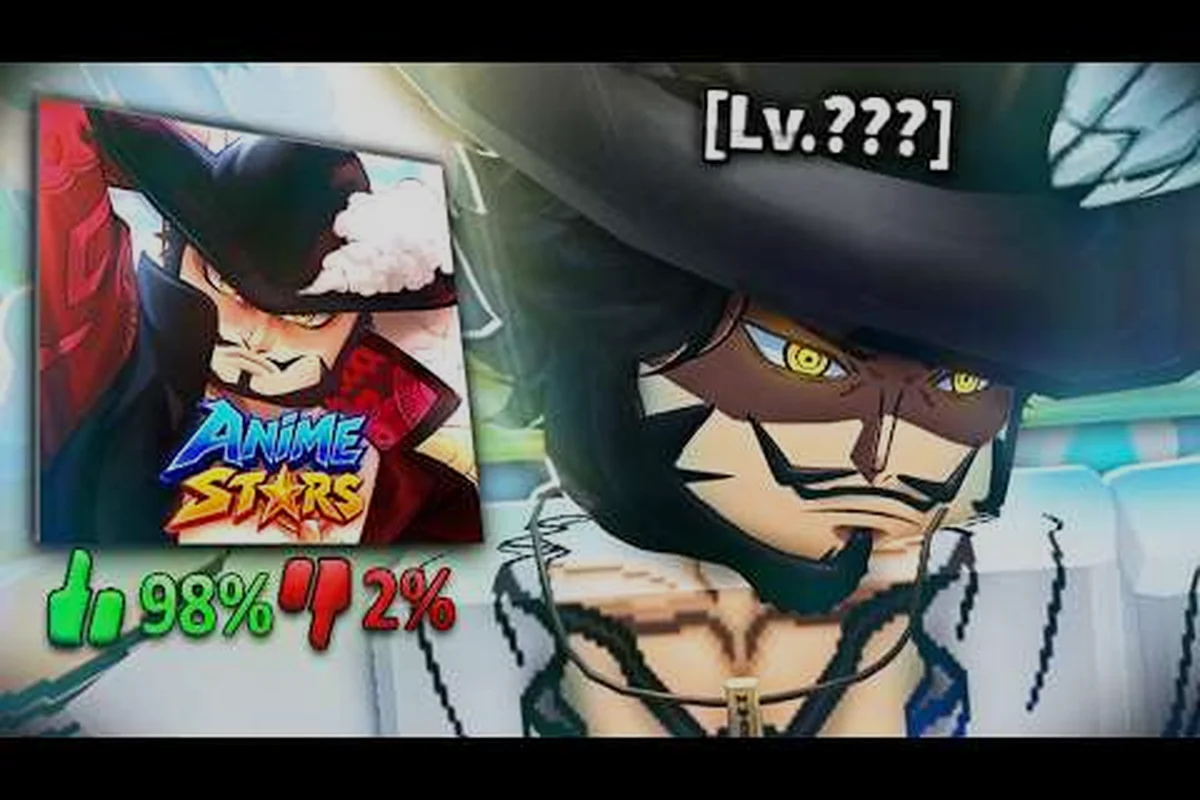
The Anime Stars best characters 2026 lineup has shifted hard since the [UPDATE 2.5] patch dropped, and players chasing the strongest heroes need a refreshed read on who actually carries in co-op, Rank Up, and the toughest challenge modes. Sung Jin-Woo still anchors most top rosters, but a wave of newly buffed carries has pushed the S tier into sharper focus this year, and several older fan-favorites have fallen into A tier or lower. This guide breaks down the current top of the hero pool, shows you how to build a competitive S tier team composition, and explains the decision rules behind every tier placement so you stop guessing who to summon next.
The 2026 S Tier Hero Pool at a Glance
The current S tier in Anime Stars is small, opinionated, and ruthlessly gated by role coverage. Instead of stacking five damage dealers and hoping for the best, the meta now rewards a tight triangle: a hyper-carry, a tanky front-liner, and a utility or support flex that keeps the carry alive long enough to clear waves. Below is the condensed snapshot of the heroes that consistently top community rankings after Update 2.5, based on player reports from the official Anime Stars Discord and tier discussions tracked through the developer's AlphaXStars Roblox group.
| Hero | Primary Role | S Tier Reason | Main Weakness |
|---|---|---|---|
| Sung Jin-Woo | Hyper-carry / DPS | Massive single-target scaling, top pick in co-op carries | Needs Rank Up investment before late-game viability |
| Gojo (Six Eyes) | Burst mage / carry | Highest burst ceiling, controls boss phases | Squishy without a dedicated tank |
| Levi (Ackerman) | Hybrid carry | Strong AoE cleave + mobility for challenge modes | Falls off in long boss fights |
| Yuji Itadori | Bruiser / off-tank | Self-sustain and reliable mid-range damage | Outclassed by pure carries in raw DPS |
| Makima | Support / utility | Team-wide buffs, clutch revives, scales the whole roster | Low personal damage output |
Notice how only one true support — Makima — sits at S tier right now. The roster rewards you for picking role enablers that multiply your carry's damage, not for stacking five carries that all want the same limited resources. If you want a fuller side-by-side of every hero, the anime stars tier list breaks each unit down with stat comparisons.
Why Sung Jin-Woo Still Leads the Year
Even after several balance passes, Sung Jin-Woo remains the single most important hero in the 2026 meta because his passive scaling interacts with the Rank Up system more cleanly than any other carry. Players who invest early into his rank path see a compounding damage curve that other heroes simply cannot match at equivalent resource levels. The other S tier picks can outperform him in very specific scenarios, but none of them can do it across every game mode with the same reliability, which is exactly what you want from your anchor slot in any S tier team composition.
The Hidden Role: Utility Flex
Most players underrate the utility flex slot until they lose a co-op run because nobody peeled for the carry. Yuji Itadori and Makima both qualify as flex picks, but they solve different problems: Yuji holds the line and self-heals, while Makima amplifies everyone else through her passive buffs. The choice between them depends on whether your carry is more likely to die to burst damage (bring Makima) or to sustained pressure (bring Yuji). That single decision is often the difference between a clean S tier team and a stalled A tier run.
How the 2026 Tier List Was Built
Ranking heroes is not the same as picking favorites. The Anime Stars best characters 2026 tier list was assembled using four weighted criteria, each scored on observable in-game behavior rather than hype. This is the same framework that the broader community uses when debating tier placements on Discord, and it lines up with the sort of evaluation you'd expect from a dedicated anime stars tier list maker tool.
| Criterion | Weight | What It Measures |
|---|---|---|
| Damage Output | 30% | Raw DPS ceiling and average sustained damage |
| Survivability | 25% | Effective HP, self-sustain, and how often the hero dies in co-op |
| Utility / Buff Value | 25% | Team-wide buffs, revives, crowd control, and support passives |
| Ease of Build | 20% | How much Rank Up / gear investment is needed before the hero feels strong |
A hero only earns an S tier slot when they score at the top of at least two criteria and never drop below mid-pack in the others. That is why pure nukers like Levi still land in S tier despite their survivability concerns — their damage and utility scores carry the rest of the sheet.
Why Pure DPS Is Not Enough
A hero can have the highest theoretical DPS in the game and still fall out of S tier if they are unusable without a fully maxed build. Ease of Build is the 20% tiebreaker that keeps fan-favorites honest, and it is the criterion most casual players overlook when arguing tier lists. A hero that performs at 80% of its potential on day one is almost always more valuable to a real team than a hero that performs at 150% but only after a week of grinding, because the rank-up grind itself rewards consistency over peak performance.
How Community Data Shapes the Ranks
The tier placements are not pulled from thin air. They are cross-referenced with reported summon rates, win rates in public co-op lobbies, and clear-time benchmarks posted by experienced players. According to the data available through the Anime Stars official page, the game has cleared 4.3 million visits and currently hosts around 2,800 concurrent players, which is a deep enough sample size to trust the broad strokes of the meta even if individual matchups still swing wildly. The Anime Stars update log on YouTube also gives a useful play-by-play of how the strongest heroes perform in real runs.
Building an S Tier Team Composition Step by Step
Knowing who the S tier heroes are does not automatically give you a winning team. The actual craft is matching roles, covering weaknesses, and sequencing your Rank Up investments so that the whole squad powers up together rather than trickling in one hero at a time. This is the part most guides skip, and it is also where the anime stars s tier list guide approach earns its keep.
| Step | Action | Why It Matters |
|---|---|---|
| 1 | Anchor with a hyper-carry (Sung Jin-Woo) | Sets the damage ceiling and defines your win condition |
| 2 | Add a tanky flex (Yuji Itadori) | Absorbs pressure so the carry can output damage uninterrupted |
| 3 | Slot a support or buff unit (Makima) | Multiplies the entire team's effective power |
| 4 | Two flex picks for mode coverage | Adapts to boss mechanics, wave layouts, and challenge modifiers |
| 5 | Stagger Rank Up investments | Avoids leaving one hero stuck at low rank while others peak |
A typical end-state composition for the current meta looks like this:
-
Slot 1 — Sung Jin-Woo as the primary carry
-
Slot 2 — Gojo (Six Eyes) as the secondary carry / burst pick
-
Slot 3 — Yuji Itadori as the bruiser flex
-
Slot 4 — Makima as the support anchor
-
Slot 5 — Mode-specific flex (Levi for AoE, or a specialist for boss rushes)
This is a 2-1-1-1 formation, sometimes called the standard "carry plus engine" composition, and it is the most reliable starting point for any S tier team composition in 2026.
Reading the Anime Stars Tier List Explained
If you have ever wondered why two tier lists disagree, the answer almost always comes down to which criterion the author weighted most heavily. A list that prioritizes raw damage will rank Levi above Yuji, while a list that weights survivability and teamplay will flip them. The anime stars tier list explained framework above makes the trade-off explicit: any hero that scores high on two criteria and average on the others is a legitimate S tier pick, even if the rest of the community ranks them slightly differently. This is also why some tier lists slot Levi in S and others leave him in high A — both readings are defensible under the same scoring system.
When to Break the Standard Composition
The 2-1-1-1 template is the safest default, but it is not the only viable structure. In some challenge modes you will want to run a triple-carry comp (Sung Jin-Woo, Gojo, Levi) if the modifier rewards raw damage output and removes the need for a tank. In longer co-op runs against bosses with high burst phases, a 1-2-2 (one carry, two bruisers, two supports) comp can outperform the default because the extra peel keeps your carry alive through the dangerous windows. The point is not to memorize a single team — it is to recognize which role slots are essential and which ones are negotiable based on the encounter.
S Tier vs A Tier vs B Tier: What Actually Changes
The gap between S tier and A tier is narrower than most players think, and understanding the boundary is the difference between confidently committing resources and second-guessing every summon. This is the core of any anime stars how to build s tier team discussion, because the wrong investment can leave you with a roster of A tier heroes that never quite clears the hardest content.
| Tier | Performance Ceiling | Build Investment | Realistic Player Experience | | --- | --- | --- | --- | --- | | S Tier | Wins every encounter with proper play | High but front-loaded | Reliable in all modes after one or two rank-ups | | A Tier | Wins most encounters, struggles in a few | Medium | Strong in co-op, weaker in solo challenge modes | | B Tier | Wins easy content, stalls on hard modes | Low to medium | Solid for farming, not for pushing leaderboards |
The biggest mistake players make is treating A tier as "almost as good as S." In practice, the S tier heroes are the ones that let you skip a Rank Up tier or two and still clear late-game content, because their base kit is so strong that the diminishing returns from extra investment do not bite as hard. A tier heroes need closer to maxed investment to match what an S tier hero does at half-build, and that extra grind rarely pays off in the modes that matter most.
The Role-Coverage Trap
A common mistake is to build three heroes from the same role — for example, Sung Jin-Woo, Gojo, and Levi all in one team — and then wonder why your runs keep stalling in the late game. Role overlap feels powerful in the early game because every slot is doing damage, but the moment you face a boss with high sustained pressure, the lack of a tank and a support becomes obvious. A balanced S tier team composition is almost always stronger than a stacked carry comp, even when the individual carry slots in the balanced team are technically lower-tier.
B Tier Heroes Have a Place
B tier is not a death sentence. Heroes in this band are often the best farming tools in the game because they clear low-difficulty content faster than S tier heroes per unit of investment. If you are grinding out materials to push your S tier carries to their next rank, running a B tier team in the easier modes is usually the most efficient use of your time. The mistake is bringing a B tier hero into a fight that demands S tier output and then blaming the hero for the loss.
Picking the Right Carry for Your Playstyle
Not every S tier hero is right for every player, and the anime stars best team composition discussion always comes back to personal preference once role coverage is handled. The four S tier carries each suit a different playstyle, and matching your carry to how you actually play the game is more important than picking whichever hero has the highest theoretical DPS.
| Carry | Best For | Playstyle Match | Risk Profile |
|---|---|---|---|
| Sung Jin-Woo | All-around reliability | Players who want a single anchor for every mode | Low — rarely the wrong pick |
| Gojo (Six Eyes) | Boss rushes and burst windows | Aggressive players who like high-skill carries | High — punished hard for mistakes |
| Levi (Ackerman) | Wave clear and challenge modes | Fast-paced players who prefer AoE chaos | Medium — strong in his mode, weak outside it |
| Yuji Itadori | Solo runs and long fights | Defensive players who like bruiser pacing | Low — self-sustain covers many mistakes |
If you mostly play co-op with friends and want a carry that slots into any team comp, Sung Jin-Woo is the safest anchor. If you are a solo player who wants to push the highest-difficulty challenge modes, Gojo offers a higher ceiling at the cost of a steeper execution curve. If you are still building up your roster and want a hero that carries you through the mid-game while you farm resources for the harder carries, Yuji is the most forgiving option.
How to Read Tier List Updates
Every major update shuffles the tier list, and learning to read those shifts is the single best long-term investment you can make in your roster. The Update 2.5 patch, for example, buffed several previously mid-tier supports and indirectly pushed the meta toward carry-plus-support compositions. The heroes that benefited most were the ones whose passives scaled with team size, which is why Makima jumped into S tier conversations this year. If you want a more granular view of which heroes moved and why, the anime stars meta tier list tracks those shifts on a per-patch basis.
When a Hero Falls Out of S Tier
No hero stays in S tier forever. Buffs, nerfs, new releases, and Rank Up reworks all shift the balance, and the heroes that are dominant today will almost certainly drop a tier within two or three major updates. The smart move is to spread your investment across two S tier carries and one support, rather than dumping every resource into a single hero. That way, when the meta shifts, you have a backup carry already built and you are not forced to grind from scratch on the new top pick.
Frequently Asked Questions
Who is the single best character in Anime Stars right now?
Sung Jin-Woo is widely regarded as the best character in the Anime Stars best characters 2026 lineup because his passive scaling interacts cleanly with the Rank Up system, giving him the most reliable damage curve across every game mode. He is not always the highest burst pick — Gojo can out-DPS him in single-phase boss fights — but he is the most consistent anchor for an S tier team composition.
How often does the S tier list change in Anime Stars?
Major tier shifts tend to land with each numbered update, and the UPDATE 2.5 patch notes show how rapidly the meta can move. Plan to re-evaluate your S tier team composition every time a new patch drops, and avoid dumping every resource into one hero right before a major update.
Is Makima really S tier if her damage is so low?
Yes, because tier lists weight utility and team buffs heavily, and Makima's passive amplifies the entire roster's effective output. In a coordinated co-op run, a well-built Makima often outperforms a second carry slot because her buffs scale multiplicatively with the rest of the team's damage.
Should new players chase S tier heroes first?
New players should focus on a single S tier carry plus a durable A tier bruiser, because the resource cost of building a full S tier team is brutal in the early game. Pair Sung Jin-Woo with a forgiving hero like Yuji Itadori, and you can clear most early-to-mid content while you farm for the rest of your roster. A focused anime stars beginner guide approach beats trying to build a top-tier team composition from day one.
What is the best S tier team composition for co-op?
The strongest co-op comp right now pairs Sung Jin-Woo as the primary carry, Gojo as the secondary burst pick, Yuji Itadori as the bruiser flex, Makima as the support anchor, and one mode-specific flex in the final slot. This 2-1-1-1 structure covers every role, scales well into late-game content, and lets you adapt the flex slot based on the encounter. For a deeper look at how to tune this composition for your own account, the anime stars highest power build guide covers the stat and gear side of the equation.